
- About us
- Products
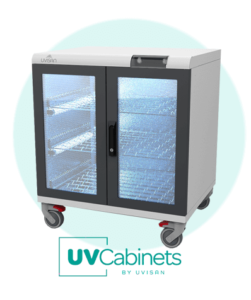
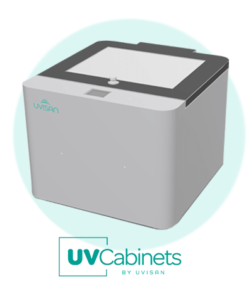
Uvisan’s smallest full-power UV-C cabinet, disinfect and charge up to two headsets.
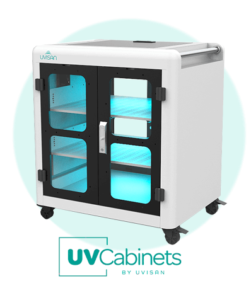

Cleanroom™ Whole-room, safe, programmable disinfection, in just 10 minutes.
- Technology
- Resources
- Blog
- Contact us
How UV-C Sterilisation Works: The Science Behind Uvisan Cabinets

UV-C sterilisation has become a dependable part of modern hygiene strategies, especially in environments where shared devices move between users all day long. Whether it’s VR headsets in training suites, tablets in classrooms, or handheld scanners on busy front desks, organisations need a way to disinfect equipment quickly without moisture, heat, or harsh chemicals. This is exactly where Uvisan’s UV-C technology comes into its own.
Below, we break down the science behind UV-C, how Uvisan cabinets deliver safe and consistent results, and why UV-C is increasingly the preferred method for businesses and institutions looking to raise hygiene standards.
What Is UV-C Sterilisation?
At its core, UVC sterilisation involves exposing microorganisms to short‑wavelength ultraviolet light in the 200–280 nm range. This portion of the spectrum is naturally blocked by the ozone layer, so UV-C doesn’t reach us from the sun. However, when recreated in a controlled environment, it becomes one of the most effective tools we have for inactivating bacteria, viruses, fungi, and spores.
Microbes absorb UV-C light directly into their genetic material. DNA and RNA bases form abnormal bonds, commonly thymine or cytosine dimers, that prevent the organism from copying itself. If it can’t replicate, it can’t spread. This is a well‑documented mechanism supported across decades of laboratory research and is the same underpinning seen in both academic reviews and independent validation studies.
For readers looking to explore the fundamentals, Uvisan’s own overview, Understanding the Science Behind UV-C Disinfection, offers a clear foundation.
Inside a Uvisan UV-C Steriliser Cabinet
A UVC steriliser cabinet is built around a simple workflow: load the devices, close the door, and run a pre‑set cycle. What happens inside that sealed chamber, however, is carefully engineered.
Uvisan cabinets use medical‑grade UV-C lamps calibrated to deliver an optimal dose, measured in millijoules per square centimetre, across the entire device surface. Each cycle typically lasts around two minutes. Within that time, lamps flood the interior with uniform light, and reflective surfaces ensure there are no significant shadows, dead zones, or inconsistencies.
These design principles tackle the biggest variables that affect UV-C performance:
- Dose: Higher microbial loads or larger organisms require more energy.
- Distance: UV-C intensity decreases with distance, so geometry matters.
- Shadowing: Anything that blocks the light reduces its sterilising effect.
By controlling these factors, Uvisan ensures a predictable outcome every time. This reliability is what makes Our Cabinets valuable across sectors that depend on fast, repeatable infection‑control measures.
For practical examples of how UV-C supports clinical workflows, Uvisan’s healthcare insight piece is a helpful reference (see How UV‑C disinfection enhances infection control in healthcare settings).
UV-C LED Sterilisers vs. Traditional UV-C Bulbs
The industry is moving quickly toward LED-based UV solutions. A UVC led steriliser replaces mercury lamps with deep‑UV LEDs that offer:
- Instant on/off performance
- Precise wavelength control
- Improved energy efficiency
- Longer operating life
- A mercury‑free design aligned with modern sustainability goals
LED technology is improving year on year and will play an increasingly important role in portable or compact systems. However, for larger cabinet‑based UVC sterilisation box solutions, high‑quality UV-C lamps still deliver the most consistent dose output across wider surface areas.
Both technologies will continue to evolve, and Uvisan evaluates each based on evidence, safety, and real‑world performance, never hype. For a broader introduction to UV-C power and applications, visit Uvisan’s blog, The Power of UV‑C.
What About UV-C Air Sterilisation?
While cabinets focus on surface disinfection, UVC air sterilisation deals with the air circulating through a space. In these systems, airflow is directed past UV-C lamps or LEDs inside a sealed unit. As airborne microbes move through, they are exposed to a controlled UV-C dose.
This is particularly helpful for environments with high footfall or poor ventilation. As with surface cleaning, the same principles apply: dose, exposure time, and geometry all influence effectiveness.
Although not every space requires air disinfection, it’s becoming an important tool in healthcare, education, and public venues where airborne pathogens can spread quickly.
Why UV-C Sterilisation Outperforms Chemical Cleaning
Chemical wipes and sprays are familiar and practical, but they have limitations:
- They rely on manual technique.
- They can leave residue, moisture, or odours.
- They may damage electronics over time.
- They struggle with hinges, textured surfaces, and ports.
A UVC light steriliser avoids all of these problems. UV-C works dry, doesn’t corrode sensitive materials, and doesn’t introduce harmful chemicals into the environment. More importantly, it delivers a repeatable outcome that doesn’t depend on the user’s skill.
Real‑world deployments, including NHS trusts and training hospitals, have shown measurable reductions in surface contamination when UV-C is added as a second step after physical cleaning.
Where Uvisan UV-C Sterilisers Are Used Today
Uvisan serves organisations that depend on uptime, consistency, and safe handling of shared electronics. Here’s where our tech is making a difference:
VR/AR/XR and Tech Rental
High‑turnover environments rely on Uvisan to disinfect headsets, controllers, cables, and accessories between users. It keeps operations running smoothly without adding disinfectant costs.
Education
Schools, colleges, and universities disinfect entire class sets of laptops, headphones, and tablets between lessons, without filling rooms with odours or chemical mist.
Healthcare and Simulation Training
From shared tablets to blood‑pressure cuffs, UV-C helps training centres maintain clinical standards. Read more via How UV‑C disinfection enhances infection control in healthcare settings.
Corporate and Enterprise
Hot‑desking environments depend on ready‑to‑use keyboards, mice, meeting‑room kits, and loaner devices.
Creative and Media Production
Sensitive cameras and microphones benefit from dry disinfection with no moisture risk.
Public and Government Venues
Museums, libraries, and transport hubs process handheld audio guides, scanners, and radios in efficient batches.
Clinical, Laboratory, Pharmaceutical and Cleanroom Environments
Here, stability and repeatability matter most. Uvisan systems support SOPs with documented cycles and a controlled, residue‑free process.
These sectors share the same challenge: high item turnover and no time for complicated procedures. UV-C removes friction from hygiene routines.
Conclusion: The Future of UV-C Sterilisation Technology
UVC sterilisation continues to evolve. LED technologies are improving, engineering refinements are boosting dose consistency, and integrated system monitoring is helping organisations validate performance in real time. Whether you need a cabinet, a UVCsterilisator, or a scalable hygiene standard for multi‑site operations, the science behind UV‑C remains robust and well‑understood.
Uvisan’s focus is simple: provide safe, evidence‑based systems that help organisations protect people, protect equipment, and maintain operational confidence. Our technology is already supporting healthcare, education, simulation, rental fleets, enterprise spaces, and specialist environments across the UK and beyond.
Reach out if you’re exploring capacity options, use cases, or integration planning, the Uvisan team can help.

Uvisan Limited
Kingswood House South Road
Bristol BS15 8JF
© Copyright 2024